Contact Us

info@pqconintelli.com


Executive Construction Intelligence

See More. Understand More. Decide Better.

See the Business More Clearly. Lead It More Intelligently.

Construction executives are responsible for decisions that extend far beyond individual projects. Growth. Operations. People. Technology. Customers. Risk. Capital. Systems. Strategy. Change.

The quality of those decisions depends on the quality of the intelligence surrounding them.

PQ Executive Construction Intelligence™ helps construction leaders develop greater visibility into the business behind the build—so leadership can identify what matters, understand what is changing, and make better-informed decisions about what comes next.

  • Better visibility creates better questions.
  • Better questions create better decisions.
  • Better decisions build stronger companies.

WHAT IS EXECUTIVE CONSTRUCTION INTELLIGENCE?

Intelligence Designed for the Decisions Construction Leaders Actually Make.

Executive Construction Intelligence is the disciplined use of operational insight, business information, technology awareness, risk intelligence, organizational context, and executive judgment to strengthen decision-making across the construction enterprise.

It connects information that may otherwise remain separated.

Operations

Technology

Customers

People

Processes

Risk

Growth

Performance

Leadership Priorities

The objective is not to give executives more information.

The objective is to help leadership understand what the information means.

INFORMATION IS NOT INTELLIGENCE

INFORMATION IS NOT INTELLIGENCE

Executives Are Surrounded by Information. That Does Not Mean They Have Clarity.

Reports

Dashboards

Emails

Spreadsheets

Project systems

Accounting systems

CRM platforms

Meetings

Messages

Forecasts

Documents

Employee updates

Vendor reports

A modern construction company can generate enormous amounts of information

while leadership still struggles to answer basic strategic questions quickly.

Our work may include:

  • Where are we vulnerable?
  • Where are we losing time?
  • Where are we creating unnecessary cost?
  • Where is growth creating pressure?
  • Where are systems failing to support the business?
  • Where are opportunities being missed?
  • What requires executive attention now?


More information does not automatically answer those questions.

Intelligence does.

THE EXECUTIVE VISIBILITY GAP

What Leadership Cannot See Can Still Affect the Business.

Some of the most consequential organizational problems do not announce themselves dramatically.

  • They accumulate quietly.
  • A workaround becomes a process.
  • A spreadsheet becomes mission-critical.
  • An employee becomes the only person who knows how something works.
  • A software subscription becomes permanent despite limited adoption.
  • A customer inquiry receives inconsistent follow-up.
  • A manual task consumes hundreds of hours over time.
  • Information becomes trapped between departments.
  • An AI tool enters the workplace without leadership approval.
  • A reporting process delivers yesterday’s information for tomorrow’s decision.
  • Individually, these issues may appear manageable.
  • Collectively, they can become an executive visibility gap.
  • PQ helps bring those gaps into clearer view.

THE BUSINESS BEHIND THE BUILD

Projects Create Revenue. Enterprise Capability Creates Endurance.

Construction companies rightly devote extraordinary attention to project execution.

But the long-term strength of the organization also depends on the business infrastructure supporting those projects.

That includes:

Leadership systems

Operational processes

Information flow

Technology

Technology

Institutional knowledge

Governance

Organizational capability

Business continuity

Decision-making

Scalability

Strategic discipline

PQ Executive Construction Intelligence™ focuses on these enterprise-level dimensions.

Because the strength of tomorrow’s project portfolio will depend partly on the strength of today’s business infrastructure.

SIX LENSES OF EXECUTIVE INTELLIGENCE

See the Enterprise From More Than One Angle.

A business challenge rarely exists in isolation. PQ considers construction organizations through
multiple executive lenses.

01 — STRATEGIC INTELLIGENCE

How effectively are leadership priorities, investments, capabilities, and business direction aligned?

Strategic intelligence helps executives distinguish urgent activity from genuinely important action.

02 — OPERATIONAL INTELLIGENCE

How effectively does work move through the organization?

Where are processes creating friction, delay, duplication, inconsistency, or unnecessary administrative burden?

03 — TECHNOLOGY INTELLIGENCE

Does the organization’s technology environment actually support the business?

Where are systems fragmented, underutilized, redundant, outdated, or misaligned with operational requirements?

04 — CUSTOMER INTELLIGENCE

How effectively does the organization understand, manage, communicate with, and retain relationships across the customer journey?

05 — RISK & GOVERNANCE INTELLIGENCE

Where could operational practices, technology, AI use, information handling, or organizational ambiguity create unnecessary exposure?

06 — ORGANIZATIONAL INTELLIGENCE

Where does critical knowledge live?

How effectively do people, responsibilities, communication, leadership, systems, and institutional knowledge support the organization’s ability to perform and grow?

THE QUESTIONS BEHIND THE QUESTIONS

Sometimes the Problem Leadership Sees Is Not the Problem the Business Has.

  • A company may believe it needs new software.
  • The deeper issue may be an inefficient process.
  • Leadership may believe employees need more training.
  • The deeper issue may be unclear responsibility.
  • A company may believe it needs automation.
  • The deeper issue may be inconsistent information.
  • Executives may believe they need another dashboard.
  • The deeper issue may be that the organization has not determined which information actually matters.
  • A company may believe it has a sales problem.
  • The deeper issue may be poor follow-up discipline or fragmented customer information.


Executive intelligence looks beneath the visible symptom.

PQ’s role is to help leadership ask better questions before committing resources to the wrong answer.

FROM REACTIVE TO ANTICIPATORY LEADERSHIP

The Strongest Executive Intelligence Does More Than Explain What Happened.

Traditional reporting often looks backward.

Those questions remain important.

But modern leadership increasingly needs another level of intelligence:

What is changing?

What could happen next?

Where is pressure building?

What deserves attention before it becomes urgent?

What opportunities are emerging?

What decisions should we prepare for now?

Executive Construction Intelligence helps leadership move from purely reactive management toward more anticipatory decision-making.

Not prediction for prediction’s sake. Preparedness.

EXECUTIVE DECISION SUPPORT

Some Decisions Deserve More Than Instinct Alone.

Experience and judgment are irreplaceable.

But consequential decisions become stronger when leadership can combine experience with disciplined intelligence.

PQ can support executive thinking around questions involving:

  • Business modernization
  • Operational improvement
  • Technology investments
  • AI adoption
  • Automation
  • Customer systems
  • Growth readiness
  • Organizational capability
  • Digital transformation
  • Risk and governance
  • Strategic priorities
  • Business process improvement
  • Technology consolidation
  • Transformation sequencing

Our role is not to replace executive judgment.

Our role is to strengthen the environment in which executive judgment operates.

EXECUTIVE INTELLIGENCE & TECHNOLOGY

Technology Should Increase Visibility, Not Increase Noise.

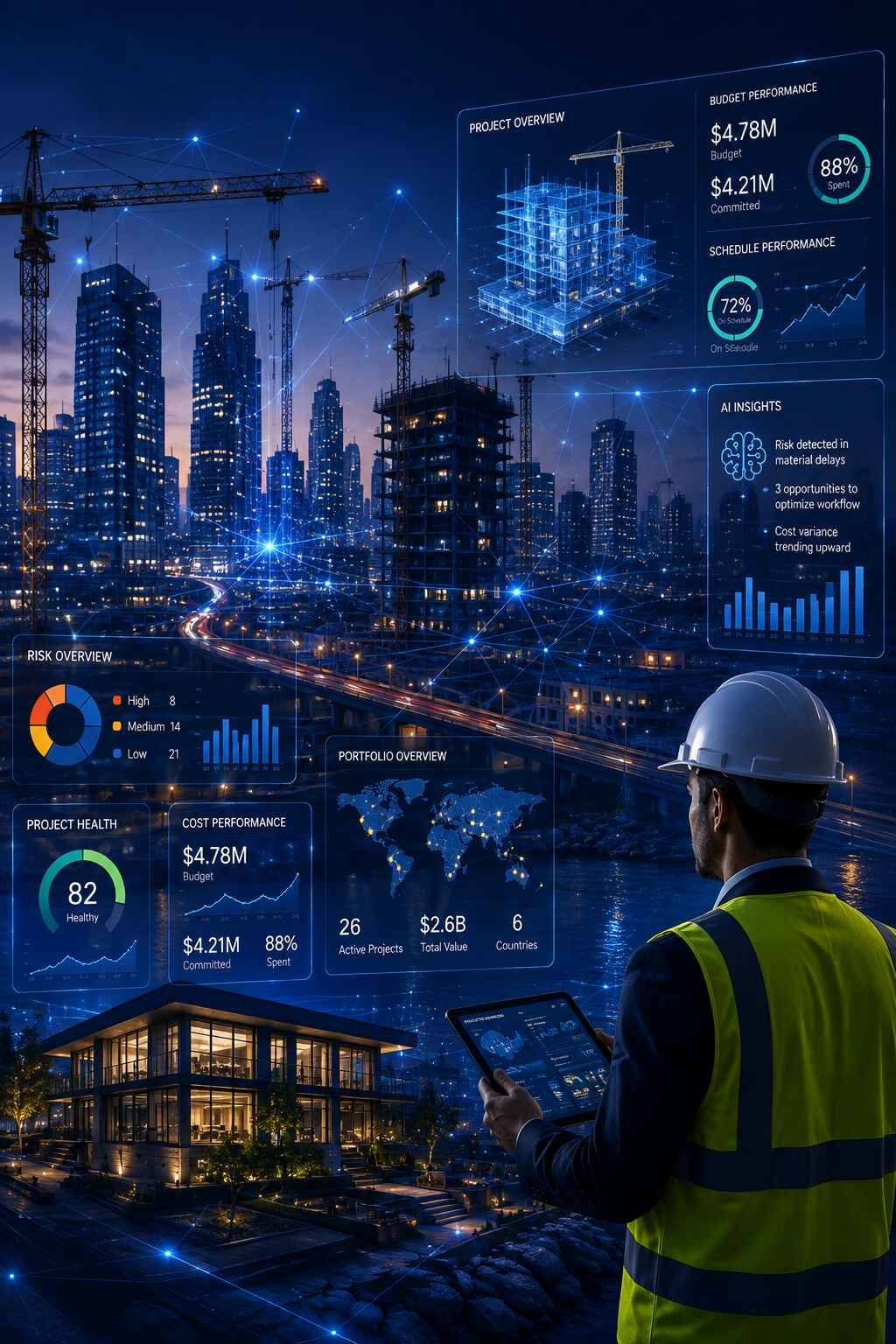
Modern technology can provide extraordinary amounts of data. But dashboards, alerts, analytics, AI systems, and reports can become counterproductive when leadership receives more information without greater clarity.

PQ believes executive technology should help answer three questions:

“What do I need to know?”

“Why does it matter?”

“What requires attention?”

Everything else should earn its place. The goal is not a leadership team staring at more screens. The goal is leadership seeing the business more clearly.
 

THE ROLE OF ARTIFICIAL INTELLIGENCE

AI Can Expand Intelligence. It Cannot Assume Accountability.

Artificial intelligence can increasingly assist organizations with:

Information Analysis

Knowledge Retrieval

Pattern Recognition

Document Review

Research

Summarization

Scenario Exploration

Workflow Assistance

Communication

Decision Preparation

But AI does not eliminate the need for executive responsibility. An algorithm does not carry fiduciary responsibility. A chatbot does not own the consequences of a decision. Technology can inform. Technology can assist. Technology can accelerate.

Leadership remains accountable.

PQ advocates for AI environments where human judgment, verification, governance, and accountability remain clear.

THE COST OF NOT KNOWING

Intelligence Gaps Have a Business Cost

Not every cost appears as a line item.

There is a cost when executives spend hours searching for information.

There is a cost when employees repeatedly perform unnecessary manual work.

There is a cost when opportunities are not followed consistently.

There is a cost when organizations pay for technology they barely use.

There is a cost when institutional knowledge leaves with an employee.

There is a cost when leaders discover risk only after an incident.

There is a cost when decisions are delayed because information cannot be trusted.

There is a cost when growth increases complexity faster than the business can absorb it.

What an organization does not know can become expensive.

Executive Construction Intelligence is partly about finding those costs before they become larger ones.

CONSTRUCTION INTELLIGENCE ASSESSMENTS™

Clarity Before Transformation.

One way PQ supports executive intelligence is through structured Construction Intelligence Assessments™.

These engagements examine selected dimensions of the organization to help leadership develop greater clarity around current conditions, strengths, gaps, risks, opportunities, and priorities.

Assessment areas may include:

AI Readiness

Digital Maturity

Operational Excellence

Construction Technology

Business Process

Risk & Governance

Customer Experience

The assessment is not the transformation.

It is intelligence for deciding what transformation—if any—should come next.

FROM INTELLIGENCE TO PRIORITY

Not Everything Important Is Equally Urgent

One of leadership’s hardest responsibilities is prioritization. Organizations may identify dozens of opportunities:

New Systems

Process Improvements

Automation

Artificial Intelligence

Training

Governance

CRM

Reporting

Customer Experience

Data Improvements

Operational Redesign

But attempting everything simultaneously can create transformation fatigue, wasted investment, and organizational confusion. Executive Construction Intelligence helps leadership distinguish among:

  • What requires attention now.
  • What should be planned next.
  • What deserves further investigation.
  • What can wait.
  • And what should not be pursued at all.

Strategy is partly the discipline of deciding what not to do.

FROM INTELLIGENCE TO ACTION

Insight Has Limited Value Until It Changes a Decision.

PQ believes executive intelligence should ultimately lead somewhere.

Depending on the organization’s priorities, intelligence may inform:

  1. A strategic roadmap.
  2. An operational improvement initiative.
  3. A technology decision.
  4. An AI pilot.
  5. A governance initiative.
  6. A CRM transformation.
  7. A workflow redesign.
  8. An automation opportunity.
  9. An executive education program.
  10. A broader modernization strategy.


Or a decision to leave something exactly as it is. The objective is not perpetual analysis.
The objective is better-informed action.

WHO NEEDS EXECUTIVE CONSTRUCTION INTELLIGENCE?

Especially Valuable When the Business Is Changing.

Executive Construction Intelligence may be particularly relevant when:

THE COMPANY IS GROWING

Processes, systems, responsibilities, and information structures that worked at one size may struggle at another.

LEADERSHIP LACKS VISIBILITY

Executives receive information, but still cannot easily understand what requires attention.

TECHNOLOGY HAS BECOME FRAGMENTED

Multiple systems exist without creating a coherent operating environment.

AI IS ENTERING THE ORGANIZATION

Leadership needs clearer strategy, governance, and priorities.

ADMINISTRATIVE COMPLEXITY IS INCREASING

Teams spend too much time navigating processes rather than creating value.

CUSTOMER MANAGEMENT NEEDS GREATER DISCIPLINE

Opportunities, communication, relationships, and information require stronger structure.

THE ORGANIZATION IS PREPARING FOR TRANSFORMATION

Leadership wants greater clarity before committing significant resources.

SOMETHING FEELS HARDER THAN IT SHOULD.

Sometimes that is the first—and most important—signal.

THE EXECUTIVE INTELLIGENCE CONVERSATION

Ten Questions Worth Asking Inside Every Growing Construction Company

What important information reaches leadership later than it should?

Which business processes depend too heavily on individual employees?

Where are teams performing repetitive work technology could appropriately assist?

Which systems are producing measurable value—and which are simply being paid for?

Where does customer information become fragmented?

What would happen if a key employee left tomorrow?

Where is AI already being used inside the organization?

Which operational problems become more serious as the company grows?

What does leadership wish it could see more clearly today?

If the organization doubled in size, what would break first?

The answers can reveal more about organizational readiness than another software demonstration ever will.

THE PQ POSITION

Intelligence Before Investment

PQ Construction Intelligence™ believes construction companies should understand their business requirements before committing significant resources to transformation.


Understand before purchasing. Prioritize before implementing. Govern before scaling. Measure before declaring success. And preserve human judgment wherever accountability demands it.

Intelligence before investment is not hesitation. It is executive discipline.

Speak with PQ Construction Intelligence™ about your organization, your priorities, and the decisions ahead.