info@pqconintelli.com
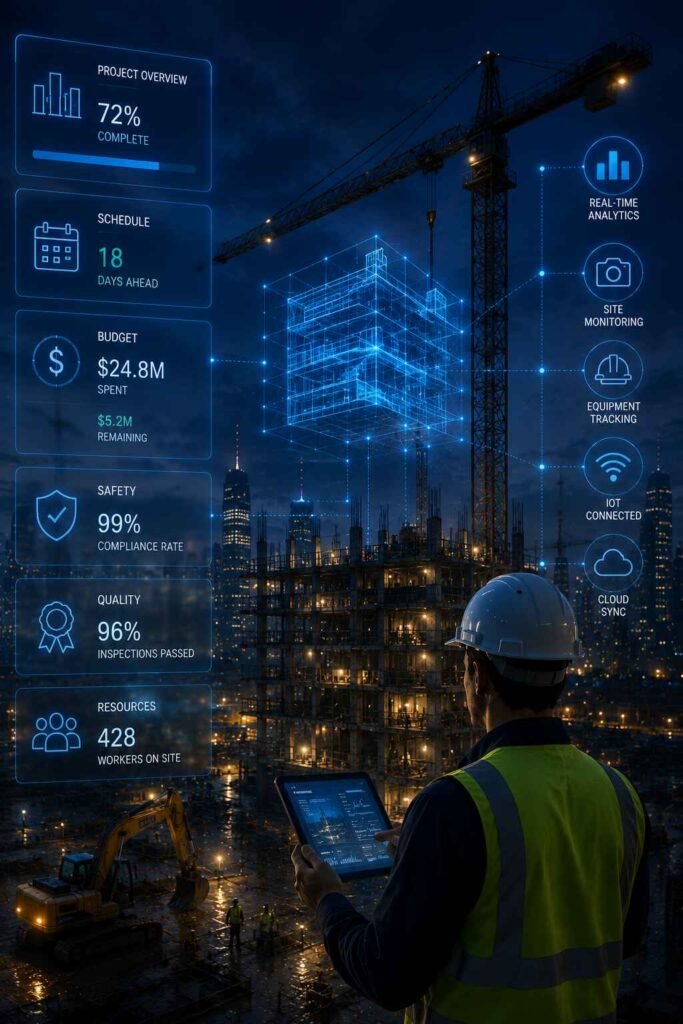
Construction companies share common pressures—but they do not share identical businesses.
A general contractor does not operate like a specialty contractor.
A design-build organization has different information flows than a residential construction enterprise.
A rapidly growing contractor faces different organizational challenges than an established company modernizing decades of systems and processes.
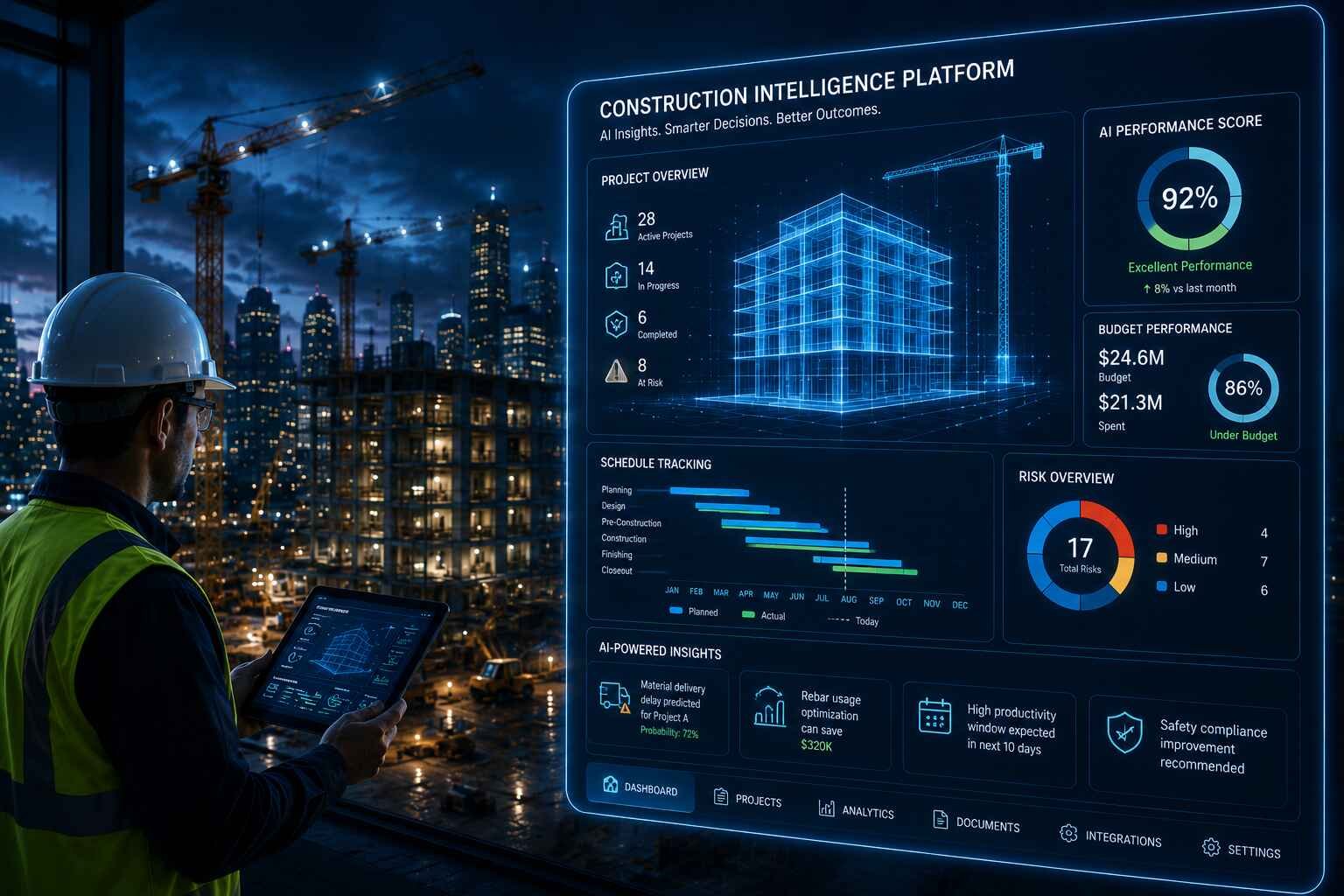
PQ Construction Intelligence™ brings an enterprise perspective to the distinct operational, technological, strategic, and leadership realities across the construction industry.
Construction is not a single operating model.
As organizations grow, information can become increasingly fragmented across projects, departments, systems, and people.
PQ can support general contractors examining questions involving:
Specialty contractors often build their reputations around deep technical capability, execution, relationships, responsiveness, and trade expertise.
Growth can introduce another challenge:
As volume increases, organizations may encounter pressure across:
PQ can help specialty contractors examine the business infrastructure supporting their expertise and identify opportunities for stronger systems, processes, technology, automation, and executive intelligence.
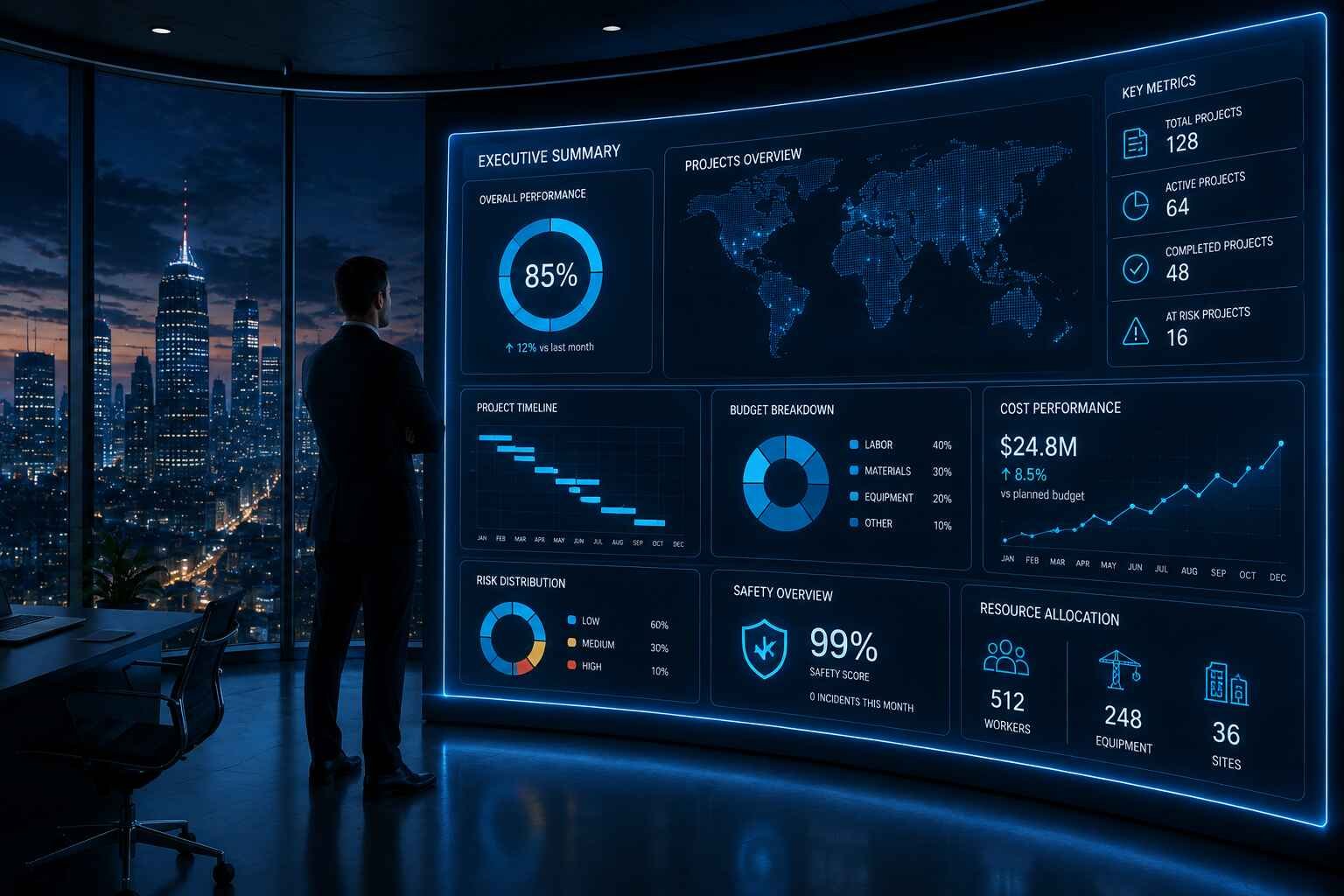
Design-build organizations operate across traditionally separated disciplines. That integration creates opportunity. It also creates complexity. Information must move effectively across design, preconstruction, construction, leadership, customers, and supporting business functions.
PQ can help organizations examine where technology, processes, information, automation, and executive visibility can better support an integrated operating environment.
Areas of consideration may include:
Construction management depends heavily on communication, information, oversight, collaboration, and decision-making.
When information becomes fragmented or delayed, coordination becomes harder.
PQ can support construction management organizations exploring opportunities involving:
Commercial construction organizations operate in environments where complexity can increase quickly.
PQ works at the enterprise level to help commercial construction leaders evaluate how the business infrastructure surrounding project delivery can become stronger.
Potential areas include:
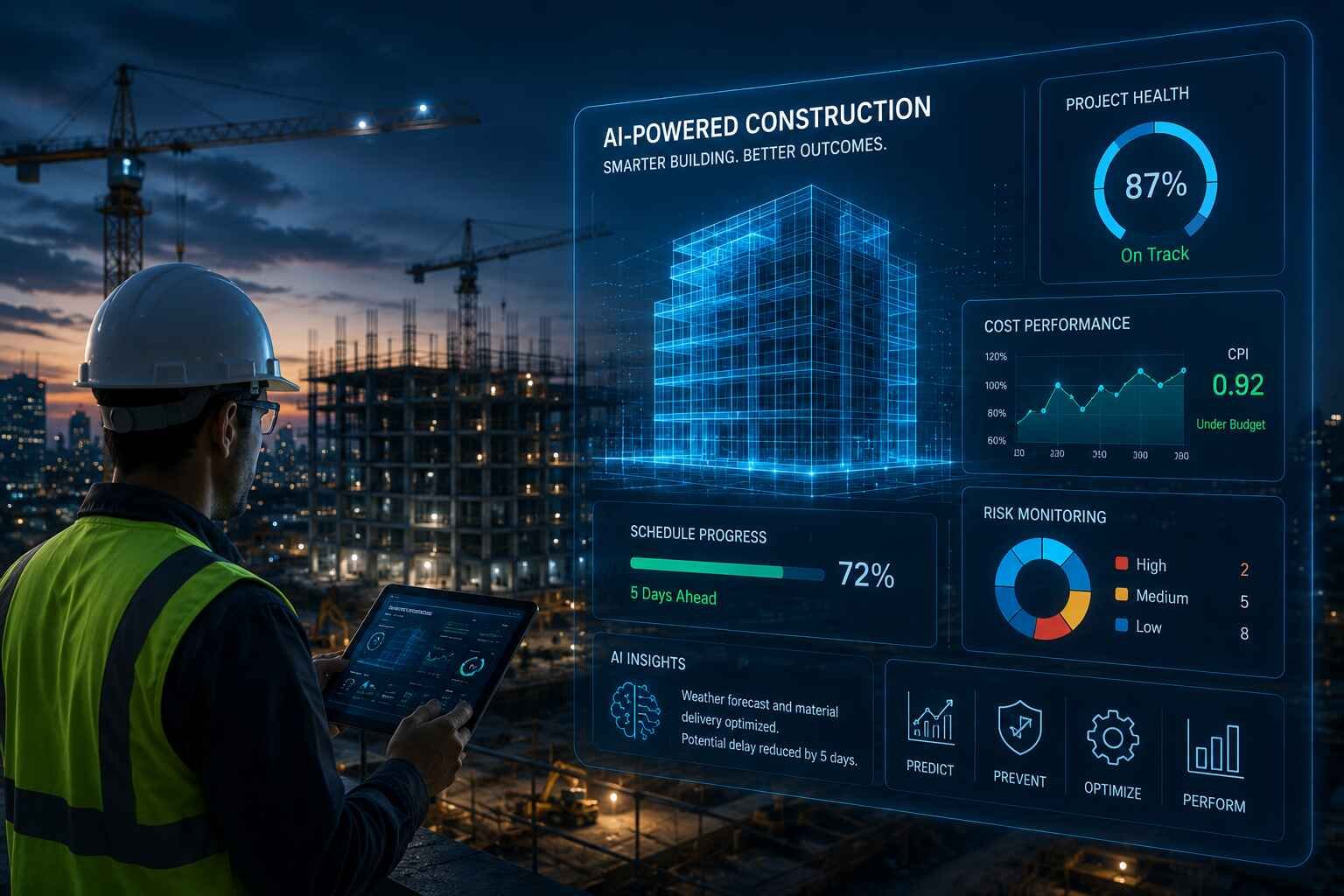
Residential construction creates a uniquely personal customer relationship.
For the client, the project may represent one of the largest financial and emotional investments of their life.
That makes communication, consistency, responsiveness, information management, and customer experience particularly important.
PQ can support growing residential construction organizations examining:
Growth is exciting.
It can also expose weaknesses that were invisible at a smaller scale.
A process that worked with five employees may fail with twenty-five.
A spreadsheet that supported ten projects may become dangerous at fifty.
An owner who once knew everything happening inside the company may suddenly find that information no longer reaches them naturally.
Informal communication becomes less reliable.
Customer follow-up becomes inconsistent.
Institutional knowledge becomes harder to manage.
Technology accumulates.
Administrative burden grows.
PQ helps growing construction companies examine whether their business infrastructure is ready for the organization they are becoming.
Some construction organizations have spent decades building successful businesses.
They have proven processes.
Long-standing relationships.
Experienced employees.
Institutional knowledge.
Established reputations.
And operating practices that have survived multiple economic cycles.
Those strengths should not be discarded simply because new technology exists.
PQ approaches established companies with respect for what already works.
The question is not:
The question is:
That may involve selectively modernizing systems, reducing unnecessary manual work, strengthening information flow, improving customer management, introducing responsible AI, or creating greater executive visibility.
As organizations expand across projects, branches, offices, markets, or geographic areas, leadership may face increasing difficulty maintaining consistent visibility.
Different teams may develop different processes.
Information may be stored differently.
Technology adoption may vary.
Customer practices may diverge.
Institutional knowledge may become decentralized.
Reporting may become increasingly difficult to compare.
PQ can help leadership examine opportunities for stronger enterprise consistency while respecting legitimate differences across operations.
Many successful construction companies begin with an exceptional builder, operator, craftsperson, or entrepreneur.
The founder becomes:
And often the person everyone calls when something goes wrong.
That model can create extraordinary early success.
It can also eventually constrain growth.
PQ can help owner-led organizations examine opportunities to strengthen:
BUILDING THE FOUNDATION
The organization may need stronger processes, customer systems, information discipline, and scalable business infrastructure.
GROWING THE ENTERPRISE
Leadership may need greater visibility, automation, technology alignment, operational consistency, and organizational capacity.
MODERNIZING THE BUSINESS
The company may need to evaluate legacy systems, digital maturity, AI opportunities, process improvement, and technology investments.
GOVERNING INNOVATION
Leadership may need responsible AI policies, oversight, vendor governance, workforce education, and stronger risk awareness.
PREPARING FOR THE NEXT ERA
The organization may be thinking about expansion, leadership transition, resilience, institutional knowledge, or long-term enterprise capability.
There is no universal starting line.
PQ begins where the organization actually stands.
PQ’s work can touch the enterprise functions surrounding construction delivery, including:
Strategy, visibility, decision support, priorities, modernization, and organizational direction.
Processes, workflows, information movement, administrative efficiency, and organizational coordination.
CRM, pipeline visibility, customer information, follow-up discipline, and opportunity management.
Digital maturity, technology alignment, AI readiness, automation, and modernization.
Communication, consistency, relationship intelligence, and customer journey improvement.
Responsible AI, information practices, accountability, oversight, and emerging technology governance.
Information accessibility, continuity, documentation, and protection of institutional knowledge.
We do not assume:
Or that a strategy that worked for another organization will automatically work for yours.


1. If our project volume doubled, which business process would struggle first?
2. Can leadership quickly see the information required to make major decisions?
3. How much critical knowledge exists only inside individual employees’ heads?
4. Are our technology systems making work easier—or simply creating more places to look?
5. Is our customer experience as disciplined as our project delivery?
6. Do we know where employees are already using artificial intelligence?
7. Is our operating model designed for the company we are becoming—or the company we used to be?
The answers begin to reveal where Construction Intelligence may create value.
Whatever the construction segment, PQ begins with the same discipline:
Whatever the construction segment, PQ begins with the same discipline: